
You Can't Claude Your Way Through Healthcare

Scott Cressman
Chief Product Officer
August 14, 2026
Reading Time6 mins
Customers are becoming much more sophisticated with AI. A year ago, many organizations were still asking whether they should use large language models at all. Today, their teams are already experimenting with Claude, ChatGPT, Cursor and other AI tools themselves. And frankly, they should be.
You and I know that Claude is remarkably good. Give it a spreadsheet and it can analyze it. Give it a browser and it can navigate it. Same thing for an unfamiliar process, it can help understand it. It can write code, reconcile documents, prototype internal tools and turn an idea into something useful remarkably quickly.
For exploration, one-off analyses, prototypes and unfamiliar problems, frontier models are extraordinary.
The problem starts when the prototype becomes the process.

A useful AI result is not yet a reliable workflow
Imagine asking Claude to review a claims spreadsheet, identify missing information and update several fields. The first result may be excellent.
But tomorrow, when the column headers change or one payer uses a different identifier, it becomes a whole new ballgame. Imagine two records containing conflicting dates or a duplicate being only partially duplicated.
You've all experienced a portal timing out halfway through processing, what happens then?
Or a team member inspecting a result, changing the prompt and trying again.
A production system cannot work that way.
It needs to know what constitutes a valid input. It needs rules for conflicting information. It needs to preserve the original data, determine when to retry, recognize when it should stop, escalate exceptions and maintain a complete record of what happened.
This is where the difference between frontier AI and vertical AI infrastructure becomes important.
Frontier models provide extraordinary intelligence. Infrastructure makes that intelligence dependable. At XY, we're building that infrastructure.
The model should not become the process
There is a temptation today to keep improving the prompt with more context, more memory, tools, skills, and potentially add another agent combined with another layer of orchestration.
All of those things can make an AI agent more capable. But capability and reliability are not the same thing.
More intelligence does not automatically create more reliability.
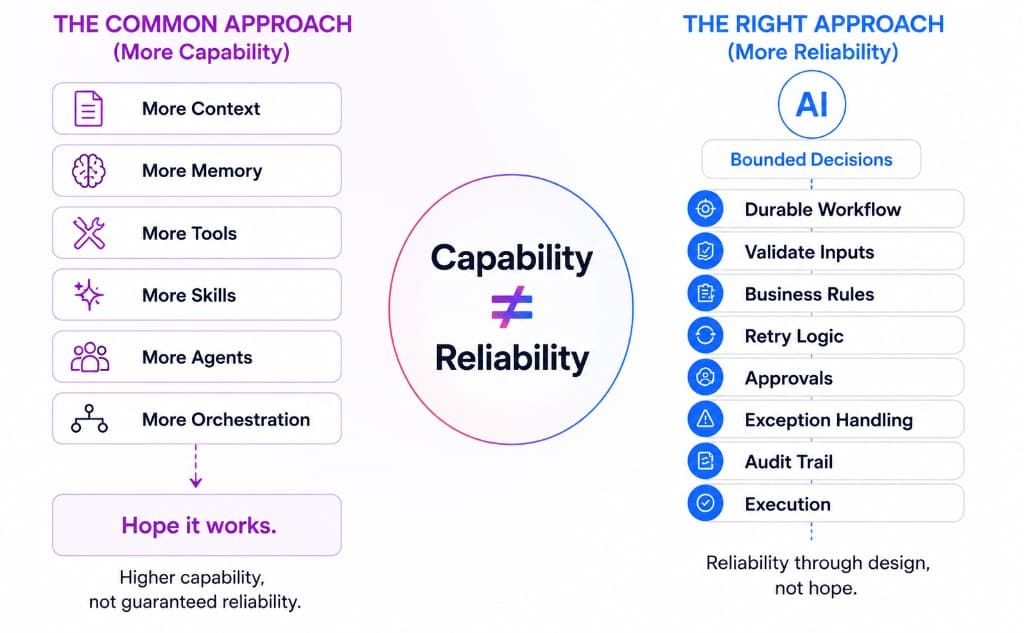
If a process must execute thousands of times, in exactly the right sequence, across multiple systems, with financial, regulatory or patient consequences, "the model will probably follow the instructions" is not a sufficient operating model.
An agent is excellent at deciding how to approach something unfamiliar.
A workflow is excellent at ensuring that something understood happens the way it is supposed to happen. And the more highly regulated the industry, the more that distinction matters.
Better intelligence does not eliminate operational complexity
Healthcare illustrates this perfectly. A healthcare workflow might touch an EHR, payer portal, clearinghouse, spreadsheet, fax system, billing platform and CRM before it is complete. The model may understand the task perfectly but that doesn't mean the systems cooperate.
Especially when you frequently have interface changes, APIs fail, spotty data, business rules varying by payer, patient, contract and organization. And we're not even starting about human made exceptions and policies change. Someone needs to know exactly what happened six months later and this is the messy layer that general-purpose intelligence does not make disappear.
In fact, as models become better, this layer becomes more visible and the bottleneck isn't "Can the AI understand what needs to happen?" but more "Can the organization execute it reliably, repeatedly and safely?"
We encounter the same boundary ourselves
At XY.AI, we do use frontier AI extensively. Claude Code, Cursor, browser tools, scripts and internal agents help us understand problems, write software and create internal processes dramatically faster than before. They are often the fastest way to discover how something should work.
Then something interesting happens because people start depending on it and the automation runs more often. We rely on it until edge cases appear. That is why we need to know when to know whether yesterday's run succeeded, if someone changed a rule.
The question is no longer "Can Claude do this?" but "What would it take to make this dependable enough to become part of the operation?"
That's the point where an experiment needs the right infrastructure.
At XY.AI, we're not asking the model to be the workflow
We use AI to help build and operate workflows without asking the model to be the workflow.
The workflow defines the sequence, permissions, business rules, validations, retries, exception paths and completion criteria. Those elements are deterministic and versioned.
AI enters at the places where intelligence genuinely adds value: interpreting an unfamiliar document, resolving ambiguity, classifying an exception, matching inconsistent records or helping understand why something failed.
The system then validates the result before continuing.
This structure gives us something equally important: observability.
Routine work follows a routine path, unfamiliar situations receive intelligence, high-risk decisions receive appropriate human review.
And when the external environment changes, the system can detect the difference and remediate rather than silently drift.
We believe models like Claude can be a component, not the control plane
Claude can help design a workflow.
It can write the code, interpret an exception, build an integration, explain an anomaly. Those are powerful capabilities, and they'll only get better.
But it can't and shouldn't become the operational control plane for your critical workflows. That's where AI infrastructure is critical.
But there is good news here: the future isn't a choice between frontier models and vertical AI infrastructure but rather the combination.
Do you have a war story about how Claude didn't quite meet the mark that you'd like to share? Reply and tell us your adventure via eileen@xy.ai!
Book a Demo
See how AI Agents can transform your operations


We Built Compiled AI. Jev-Like System 1 Models Belong Inside It.
XY.AI Labs Team
September 25, 2026
Reading Time3 mins
XY.AI Partners with CollaborateMD to Bring AI Native Revenue Cycle Operations to Thousands of Billing Teams
XY.AI Labs Team
September 21, 2026
Reading Time3 mins
Give Your AI Agent a Job To be Done, Not a Job Description
XY.AI Labs Team
September 21, 2026
Reading Time5 mins
Introducing the XY Developer Platform That Your Team Can Build On
XY.AI Labs Team
August 28, 2026
Reading Time4 mins
Ten Signs You're Ready or Not

Sam De Brouwer
August 3, 2026
Reading Time8 mins
Now Connecting to 3,500+ Payers. Here's What That Means for You
XY.AI Labs Team
July 9, 2026
Reading Time5 mins

Does Your Staff Log Into 12 Portals Before 9 AM?
XY.AI Labs Team
June 25, 2026
Reading Time3 mins

What You Don't Build Today Will Be Difficult to Catch Tomorrow
Sam De Brouwer
June 18, 2026
Reading Time8 mins
XY.AI Labs Expands Integration with athenahealth and AdvancedMD
XY.AI Labs Team
May 27, 2026
Reading Time4 mins
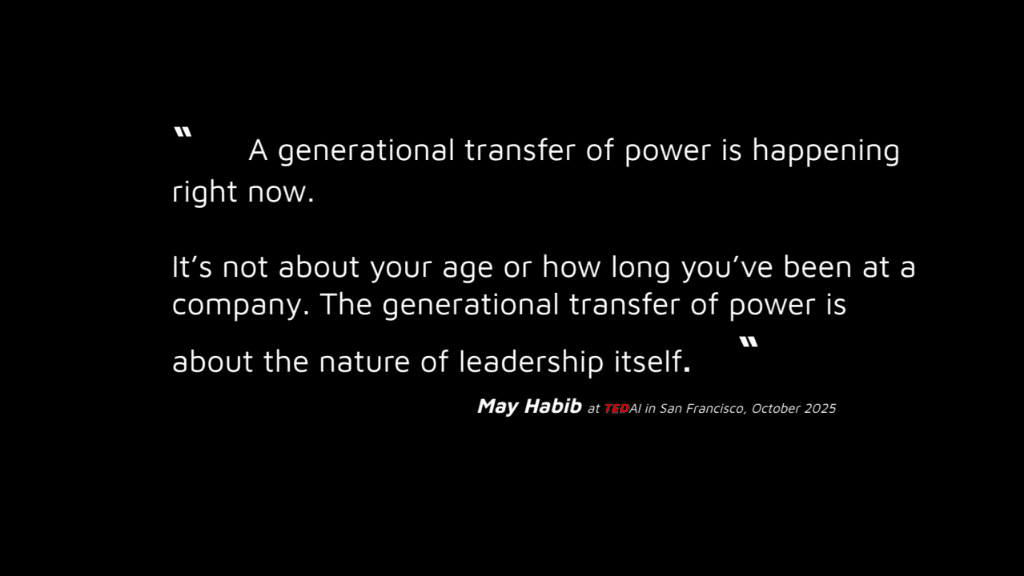
What It Means to Be an AI-Native Leader
Sam De Brouwer
May 13, 2026
Reading Time6 mins

Bringing AI to Behavioral Health at Scale: 10,000 Specialists, 4 Million Patients
XY.AI Labs Team
May 6, 2026
Reading Time5 mins
XY.AI and Uberdoc Partner to Bring AI to the Frontlines of Healthcare: Reaching 5,000 Practices Across All 50 States
XY.AI Labs Team
April 30, 2026
Reading Time4 mins

From Static Compliance to Living Compliance
XY.AI Labs Team
April 29, 2026
Reading Time10 mins
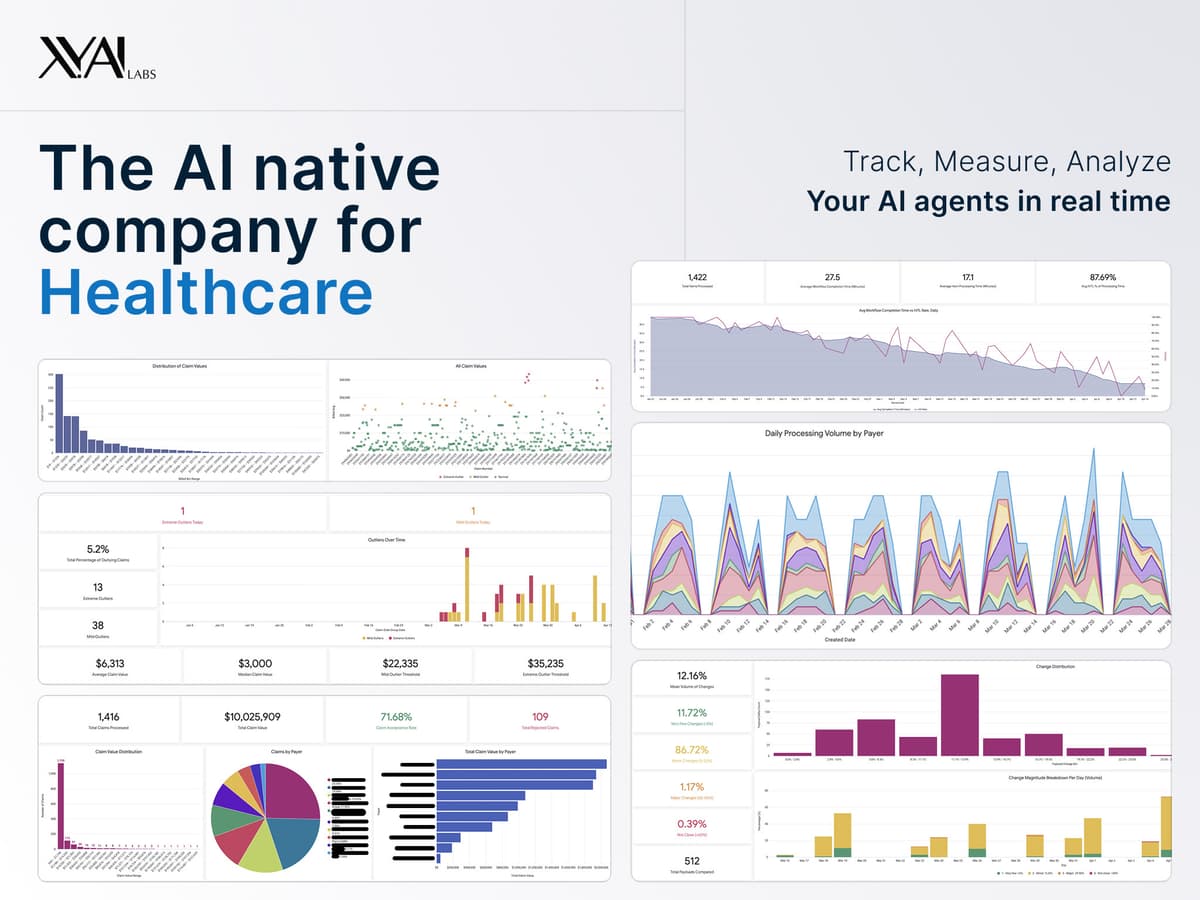
Are You Still Running Your RCM in the Dark?
XY.AI Labs Team
April 15, 2026
Reading Time4 mins

The Missing Layer in Healthcare AI: Execution
Sam De Brouwer
March 11, 2026
Reading Time5 mins
Are You Automating Jobs or Redesigning Work?
XY.AI Labs Team
February 21, 2026
Reading Time4 mins
How to Choose the Right AI Partner for Your Healthcare Operations
XY.AI Labs Team
February 5, 2026
Reading Time5 mins

Have We Been Here Before? A Thought on AI Infrastructure
Sam De Brouwer
January 29, 2026
Reading Time5 mins

Finally, Healthcare Is Becoming a Learning System with AI as its Catalyst
Sam De Brouwer
December 19, 2025
Reading Time7 mins
Connect Healthcare Systems with Agentic AI
XY.AI Labs Team
November 24, 2025
Reading Time8 mins
You love LLMs and co-pilots? You'll love AI Agents even more.
Sam De Brouwer
November 13, 2025
Reading Time10 mins
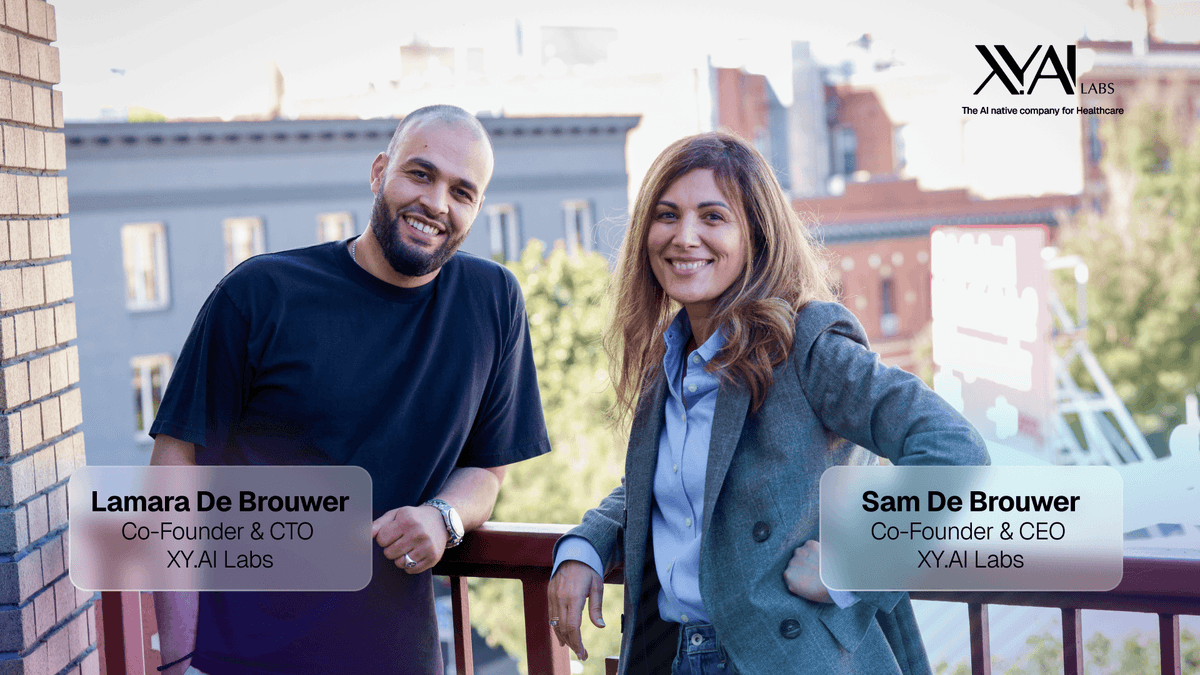
Why I'm Building for the Overlooked Majority of Healthcare
Sam De Brouwer
November 10, 2025
Reading Time6 mins
From Code to Care: How Zero-Cost Software Is Reshaping Healthcare
Sam De Brouwer
October 13, 2025
Reading Time8 mins
From Clicks to Care: Reinventing Healthcare Workflows with Our XY.AI Multimodal Browser Agents

Scott Cressman
September 12, 2025
Reading Time5 mins
Tough conversations about success and failure are not new in AI
Sam De Brouwer
August 28, 2025
Reading Time3 mins

9 Real-World Applications of AI Across Industries
XY.AI Labs Team
August 24, 2025
Reading Time10 mins
10 Benefits of Artificial Intelligence in Healthcare
XY.AI Labs Team
August 23, 2025
Reading Time10 mins
Three Reports, One Message: Give Time Back to Care
XY.AI Labs Team
August 22, 2025
Reading Time2 mins
What Free Compute Signals About a Startup like XY.AI Labs?
Sam De Brouwer
August 14, 2025
Reading Time4 mins
What We're Learning From Our Latest Integrations
Sam De Brouwer
July 31, 2025
Reading Time6 mins
Is Agentic AI Becoming the New OS for Healthcare Operations?
Sam De Brouwer
July 10, 2025
Reading Time4 mins
9 AI Trends To Transform Healthcare and Medicine And Why They're Closer Than You Think
XY.AI Labs Team
June 10, 2025
Reading Time5 mins
What I am Learning on the Front Lines of RCM in Healthcare - and Why We Can't Ignore Automation Any Longer
Sam De Brouwer
May 6, 2025
Reading Time8 mins
AI Agents in Healthcare: The Smart Workforce You Didn't Know You Could Have
Scott Cressman
April 17, 2025
Reading Time8 mins
15 Years at the Edge of AI and Healthcare - and Why Everything has Changed
Sam De Brouwer