
Ten Signs You're Ready or Not

Sam De Brouwer
CEO & Co-Founder
August 3, 2026
Reading Time8 mins
If you ask your team what's broken, they'll tell you in under thirty seconds, free of charge. They know which payer portal makes them and their co-workers consider a career change. They also know which prior auth have sat untouched since last Tuesday, and which new hire questioned their life choices during their first week processing eligibility checks. Your organization has a set of known problems that everyone complains about, and everyone already knows their shape.
Two much harder questions rarely get a clear answer:
- Are you ready to hand part of this work to a machine?
- If you are, how do you tell a real solution from a very confident demo?
This matters more in healthcare than almost anywhere else, because the numbers are hard to ignore. Industry benchmarking on revenue cycle performance puts collectible revenue lost to denials, late resubmissions, and billing errors at 3 to 5 percent a year. Prior authorization requirements have more than tripled over the last five years, with no sign of slowing. RCM staff log into five to nine (at least) different systems a day to do their jobs, and the people who get good at that juggling act tend to get wooed away, taking real replacement costs with them on the way out. Unfortunately none of it is hypothetical; ask anyone on your billing team what happened this week.
Do the math on your own number, not the industry's. Take your organization's annual collected revenue and multiply by 3 to 5 percent. That's an estimate of what you're likely leaving on the table every year in recoverable revenue alone, before you count staff time. A $20M organization: about $600K to $1M. A $50M organization: about $1.5M to $2.5M. Run your own number before you read another page.
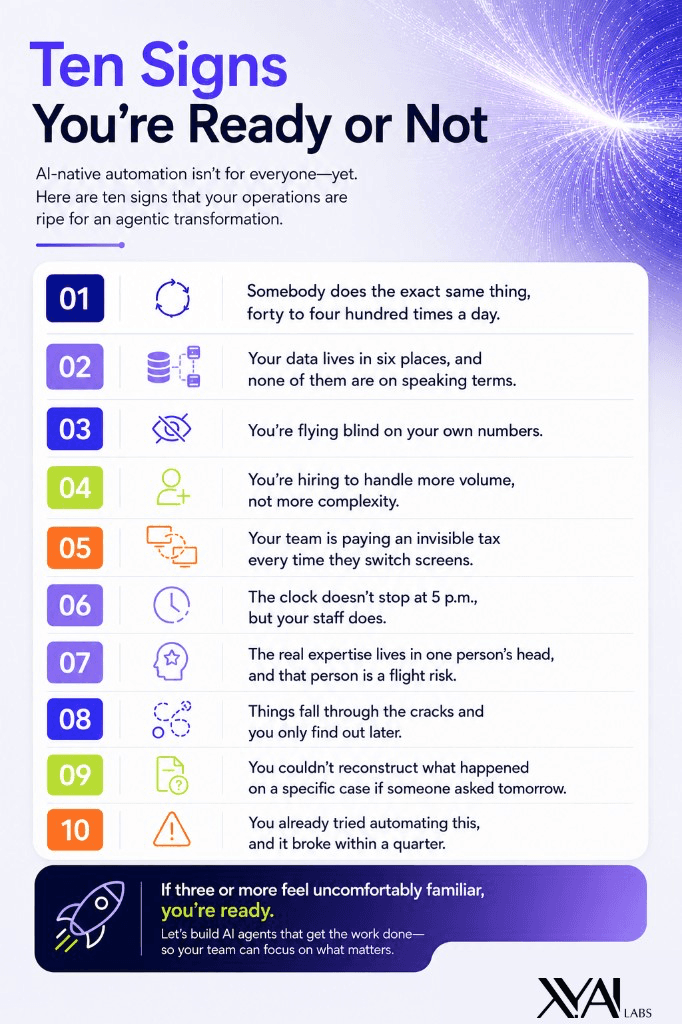
So, with everything we've built and learned, here are ten signs your operation is ready or not, and a tool at the end to help you give the AI agent a job description before it touches a single record.
The 10 Signs You're Ready Or Not — Explained
1. Somebody does the exact same thing, forty to four hundred times a day.
If a new hire could learn the task from a one-page checklist in under an hour, verifying eligibility, scrubbing a claim, checking a prior auth status, that task is a pattern, not a judgment call. A well-scoped agent does the same repetitive step every time, 24/7, without getting bored halfway through and shortcutting the last ten claims of the day.
2. Your data lives in six places (or more), and none of them are on speaking terms.
EHR, billing platform, clearinghouse, payer portals, a shared drive somebody set up in 2019 that no one has been able to explain since. Every decision your staff makes requires stitching information together by hand, and every stitch is a place an error can hide. Most of your systems are fine on their own; a human has become the integration layer between them, an expensive and error-prone way to run a business.
3. You're flying blind on your own numbers.
Your current denial rate, average prior auth turnaround, and days in AR should be numbers you know today, not numbers someone pulls next week or next month. If the answer means waiting on a report instead of glancing at a dashboard, that's a visibility problem, not a data problem, and it's different from the problem in Sign 2 above. Your systems can sync fine and still leave you missing what's happening today and any projection for what's coming, which means you're managing last quarter's problem instead of this week's.
4. You're hiring to handle more volume, not more complexity.
Look at your last few job postings. Are you hiring someone to do a new kind of work, or more of the same work you already have? If it's the latter, you're scaling headcount against a problem that doesn't have a linear solution. Denial volume goes up, you add a biller. Call volume goes up, you add a scheduler. That math works right up until it doesn't: margins are thinner than the headcount growth, and the good hires you need to backfill the role you just created are getting harder to find, not easier.
5. Your team is paying an invisible tax every time they switch screens.
This is about interruption, not volume, a different failure mode than repetition above. Research on knowledge work puts the average professional at over thirty interruptions a day, each one costing about twenty minutes to regain focus. Every time someone bounces from the EHR to a payer portal to the billing platform to a spreadsheet, they pay a piece of that tax. Multiply it by fifteen or twenty switches a day, for every person on your team, and you've built an invisible line item that never shows up on a P&L but shows up in errors, burnout, and missed KPIs.
6. The clock doesn't stop at 5 p.m., but your staff does.
Eligibility checks for Monday's first appointments don't wait for business hours, and neither do portal submissions with overnight deadlines or prior auth that need to move before a weekend procedure. None of that pauses because your team goes home. It piles up until someone gets in early enough to dig out from under it. A well-scoped agent doesn't need a lunch break or a night shift differential. It keeps working, closing a gap most practices have learned to live with.
7. The real expertise lives in one person's head, and that person is a flight risk.
Most practices have one: the person who somehow knows why a specific payer keeps rejecting modifier 59, or which field in that one intake form decides the outcome. When that person takes vacation, or leaves your organization, the knowledge doesn't transfer, it leaves. That's a single point of failure and not a smooth-running process for you.
8. Things fall through the cracks and you only find out later.
A denial goes unresolved, a prior auth expires mid-treatment, or a high-value patient inquiry sits in an inbox during a shift change because everyone assumes someone else is handling it. These failures cost the most because you don't see them happen. You see the write-off months later, with no way to trace where it went wrong.
9. You couldn't reconstruct what happened on a specific case if someone asked tomorrow.
A payer disputes a submission date, an auditor asks why a claim was coded the way it was, or a patient calls asking why a prior auth was denied twice. If answering any of those takes multiple people, phone calls, and guesses, your operation has no real audit trail, a different and often more expensive problem than a single missed case.
10. You already tried automating this, and it broke within a quarter.
Rule-based automation, the kind that says "if field A equals X, do Y," is brittle by design. It works well until a payer changes a portal layout or a claim shows up in a format nobody anticipated. A graveyard of dead automations and half-finished scripts is a sign you needed something that reasons about an unexpected situation instead of breaking on it, not a sign you failed at automation.
Note: Not every workflow needs an agent yet, and a piece like this owes you that caveat. If your volume on a task is low, if every instance is a unique judgment call with no repeatable pattern underneath it, or if you haven't documented your own process well enough that a new hire could follow it, hold off. The math illustrated here often barely applies to a two- or three-step workflow, and no agent can automate a process your own team hasn't figured out yet.
Book a Demo
See how AI Agents can transform your operations

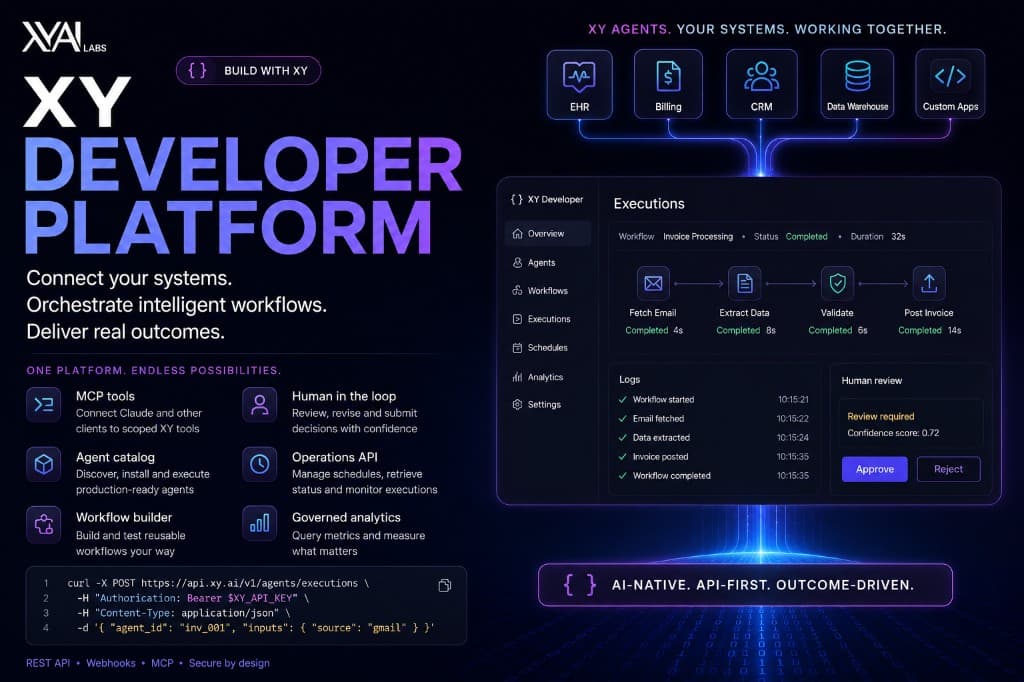
Introducing the XY Developer Platform That Your Team Can Build On
XY.AI Labs Team
August 28, 2026
Reading Time4 mins

You Can't Claude Your Way Through Healthcare

Scott Cressman
August 14, 2026
Reading Time6 mins

Now Connecting to 3,500+ Payers. Here's What That Means for You
XY.AI Labs Team
July 9, 2026
Reading Time5 mins

Does Your Staff Log Into 12 Portals Before 9 AM?
XY.AI Labs Team
June 25, 2026
Reading Time3 mins

What You Don't Build Today Will Be Difficult to Catch Tomorrow
Sam De Brouwer
June 18, 2026
Reading Time8 mins
XY.AI Labs Expands Integration with athenahealth and AdvancedMD
XY.AI Labs Team
May 27, 2026
Reading Time4 mins
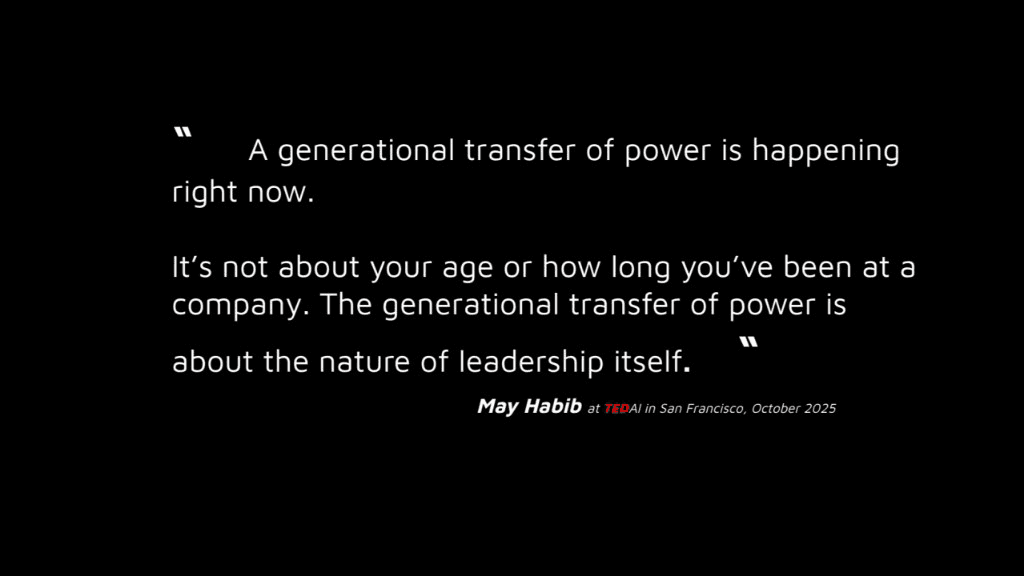
What It Means to Be an AI-Native Leader
Sam De Brouwer
May 13, 2026
Reading Time6 mins

Bringing AI to Behavioral Health at Scale: 10,000 Specialists, 4 Million Patients
XY.AI Labs Team
May 6, 2026
Reading Time5 mins
XY.AI and Uberdoc Partner to Bring AI to the Frontlines of Healthcare: Reaching 5,000 Practices Across All 50 States
XY.AI Labs Team
April 30, 2026
Reading Time4 mins

From Static Compliance to Living Compliance
XY.AI Labs Team
April 29, 2026
Reading Time10 mins
Are You Still Running Your RCM in the Dark?
XY.AI Labs Team
April 15, 2026
Reading Time4 mins

The Missing Layer in Healthcare AI: Execution
Sam De Brouwer
March 11, 2026
Reading Time5 mins
Are You Automating Jobs or Redesigning Work?
XY.AI Labs Team
February 21, 2026
Reading Time4 mins
How to Choose the Right AI Partner for Your Healthcare Operations
XY.AI Labs Team
February 5, 2026
Reading Time5 mins

Have We Been Here Before? A Thought on AI Infrastructure

Sam De Brouwer
January 29, 2026
Reading Time5 mins

Finally, Healthcare Is Becoming a Learning System with AI as its Catalyst
Sam De Brouwer
December 19, 2025
Reading Time7 mins
Connect Healthcare Systems with Agentic AI
XY.AI Labs Team
November 24, 2025
Reading Time8 mins
You love LLMs and co-pilots? You'll love AI Agents even more.
Sam De Brouwer
November 13, 2025
Reading Time10 mins

Why I'm Building for the Overlooked Majority of Healthcare
Sam De Brouwer
November 10, 2025
Reading Time6 mins
From Code to Care: How Zero-Cost Software Is Reshaping Healthcare
Sam De Brouwer
October 13, 2025
Reading Time8 mins
From Clicks to Care: Reinventing Healthcare Workflows with Our XY.AI Multimodal Browser Agents
Scott Cressman
September 12, 2025
Reading Time5 mins
Tough conversations about success and failure are not new in AI
Sam De Brouwer
August 28, 2025
Reading Time3 mins

9 Real-World Applications of AI Across Industries
XY.AI Labs Team
August 24, 2025
Reading Time10 mins

10 Benefits of Artificial Intelligence in Healthcare
XY.AI Labs Team
August 23, 2025
Reading Time10 mins
Three Reports, One Message: Give Time Back to Care
XY.AI Labs Team
August 22, 2025
Reading Time2 mins

What Free Compute Signals About a Startup like XY.AI Labs?
Sam De Brouwer
August 14, 2025
Reading Time4 mins
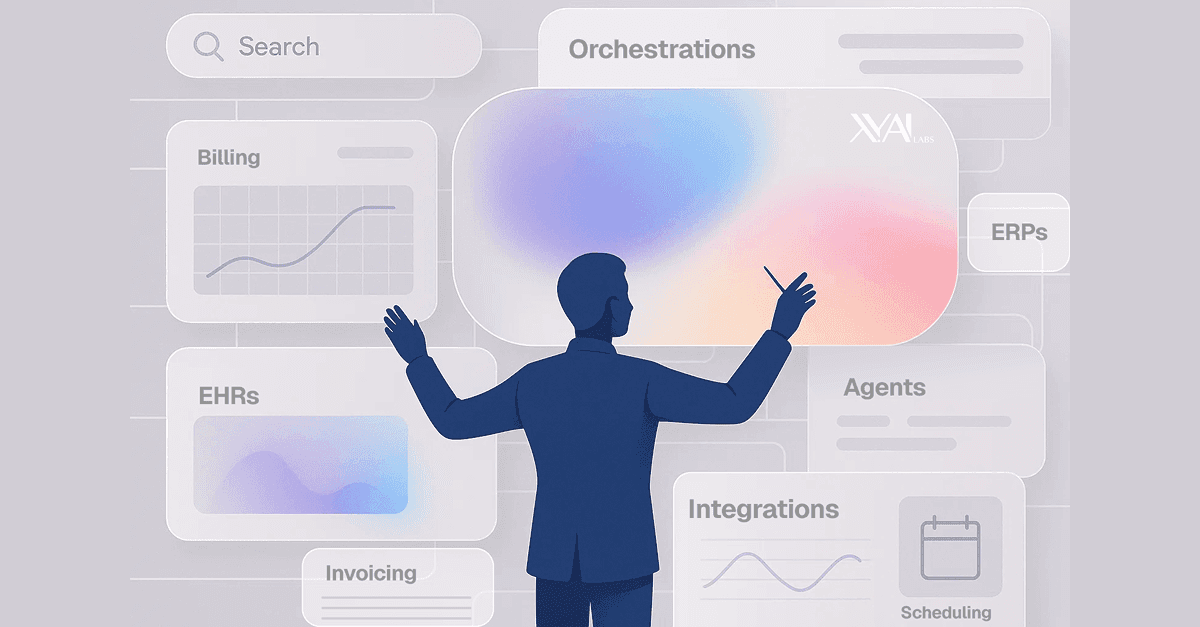
What We're Learning From Our Latest Integrations
Sam De Brouwer
July 31, 2025
Reading Time6 mins
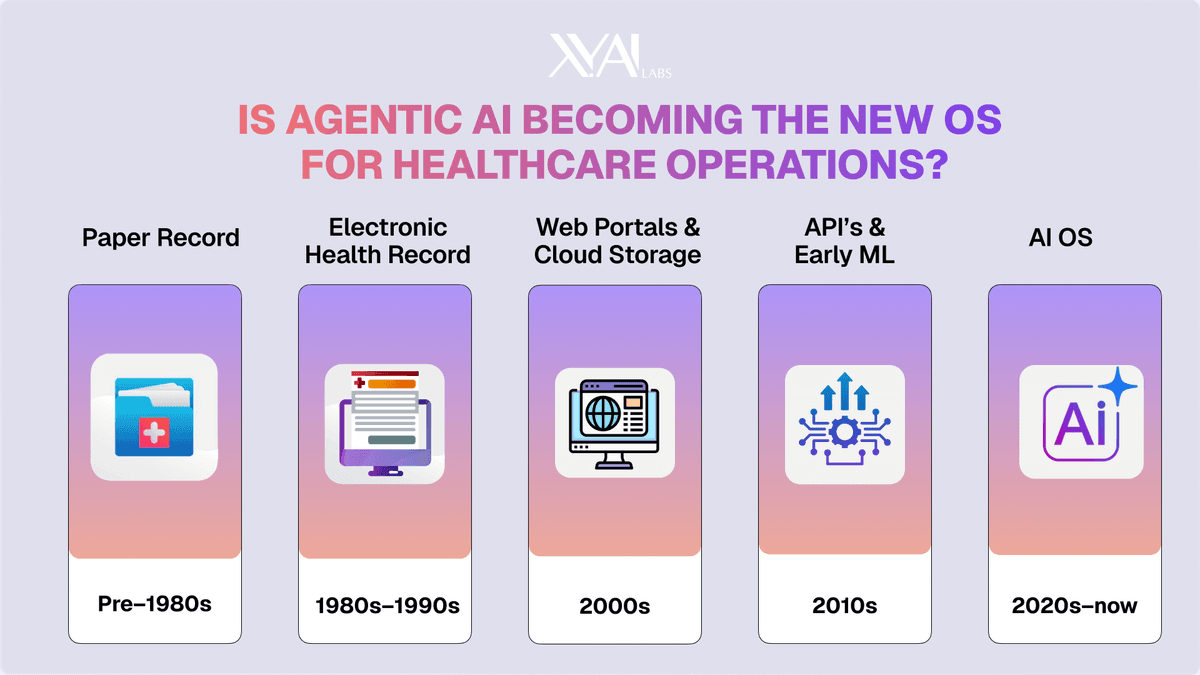
Is Agentic AI Becoming the New OS for Healthcare Operations?
Sam De Brouwer
July 10, 2025
Reading Time4 mins

9 AI Trends To Transform Healthcare and Medicine And Why They're Closer Than You Think
XY.AI Labs Team
June 10, 2025
Reading Time5 mins

What I am Learning on the Front Lines of RCM in Healthcare - and Why We Can't Ignore Automation Any Longer
Sam De Brouwer
May 6, 2025
Reading Time8 mins
AI Agents in Healthcare: The Smart Workforce You Didn't Know You Could Have
Scott Cressman
April 17, 2025
Reading Time8 mins
15 Years at the Edge of AI and Healthcare - and Why Everything has Changed
Sam De Brouwer