What It Means to Be an AI-Native Leader
Sam De Brouwer
CEO & Co-Founder
May 13, 2026
Reading Time6 mins
What It Means to Be an AI-Native Leader
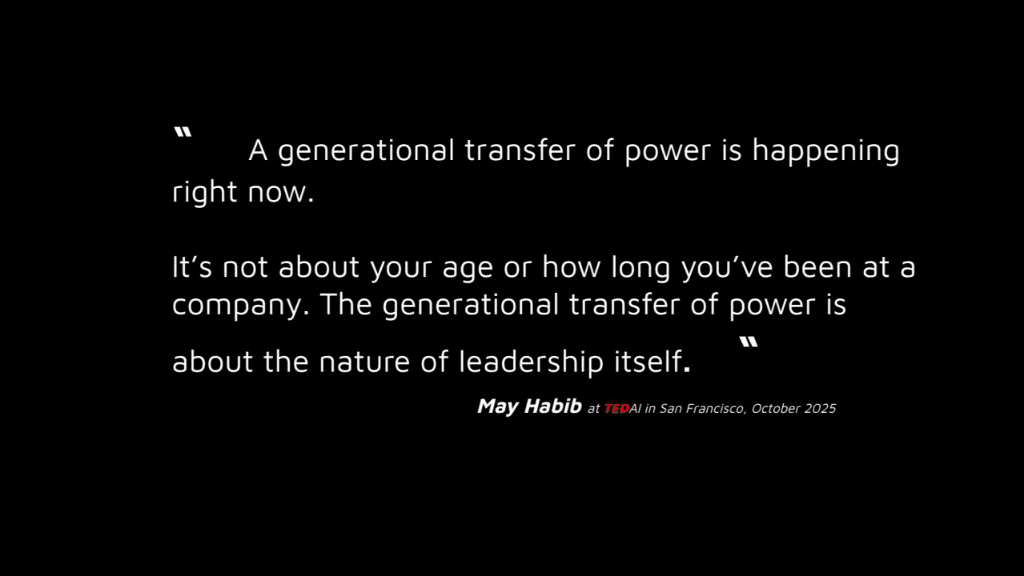
I find this quote from May Habib, Founder and CEO at WRITER incredibly powerful.
One of the most interesting conversations emerging in AI right now is about what leadership starts to look like when AI becomes part of how organizations actually operate.
I get asked often what it means to be an AI-Native leader and I like to refer to May Habib's full TED talk because it captures this shift exceptionally well. Her talk was recorded at the TED AI conference in San Francisco, a conference I've had the privilege of producing and curating over the past few years alongside many incredible voices shaping this space. What stood out to me most in May's perspective is how clearly she articulates something many leaders are beginning to experience firsthand: organizations are no longer just run by people. Increasingly, they are run by systems. And that changes leadership entirely.
One of the biggest misconceptions about AI right now is that becoming "AI-native" simply means adopting AI tools faster than everyone else.
From my experience building XY.AI Labs, that is not what AI-native means at all. There is a major difference between companies experimenting with AI, companies embedding AI into workflows, and organizations that are truly built from the ground up assuming AI agents are part of the workforce itself. That distinction sounds subtle, but operationally it changes everything.
Most leadership structures today were designed for organizations made up entirely of humans. Information moves through layers. Decisions move through meetings. Management revolves around supervision, coordination, reporting lines, and human execution.
But when AI agents become operational participants inside the company, leadership starts to evolve into something fundamentally different.
At XY.AI, every person on our team has been managing internal AI agents from day one. Not as side tools or copilots sitting in a browser tab, but as operational collaborators embedded directly into workflows across engineering, operations, product, customer support, research, and execution.
Very quickly, you realize you are no longer just managing people. You are orchestrating humans, agents, workflows, systems, context, and decision layers operating simultaneously and continuously.
That changes the nature of management itself. It changed me.
Leadership becomes less about supervision and far more about designing systems that create trust, accountability, speed, and coordination between humans and autonomous systems. You spend more time thinking about workflow architecture, escalation paths, operational clarity, judgment, and where human oversight matters most.
A product or operations leader inside an AI-native company may spend less time assigning tasks manually and more time coordinating dozens of autonomous workflows operating across teams and systems simultaneously.
What begins as automation quickly evolves into a fundamental redesign of how a company operates.
In healthcare operations, this shift becomes even more visible because the system is so operationally fragmented and administratively burdened. Scheduling, prior authorization, insurance verification, billing, credentialing, documentation, compliance, and patient coordination still depend heavily on humans manually moving information between disconnected systems.
What AI-native organizations recognize early is that many of these workflows are not simply software problems, they are coordination problems.
Once agents can continuously monitor workflows, communicate across systems, validate requirements, escalate exceptions, and execute operational tasks in real time, the role of the human team changes entirely. People spend less time pushing administrative work through systems and more time supervising outcomes, managing exceptions, and improving operational design.
This is also why becoming AI-native is extremely difficult for large enterprises. Most are trying to layer AI onto decades of legacy infrastructure, legacy processes, and legacy organizational behavior. But becoming AI-native is not a software upgrade. It is an operational and cultural redesign.
At XY.AI, we had the advantage of building differently from the beginning. Not because we are in Silicon Valley, but because mentally we were ready for this shift. After spending years in healthcare and AI, I had a good sense of how many operational problems could finally be solved faster, better, and more affordably once humans and intelligent systems started working together as one coordinated operational layer.
That assumption now influences how we hire, how we scale, how we communicate, how we build products, and how I think about leadership itself.
We are moving toward a world where organizations may have more agents than employees.
The leaders who succeed will not necessarily be the ones with the biggest teams.
They will be the ones who best understand how to orchestrate intelligence, human and artificial, into one operational system.
Originally published on LinkedIn
Book a Demo
See how AI Agents can transform your operations


We Built Compiled AI. Jev-Like System 1 Models Belong Inside It.
XY.AI Labs Team
September 25, 2026
Reading Time3 mins
XY.AI Partners with CollaborateMD to Bring AI Native Revenue Cycle Operations to Thousands of Billing Teams
XY.AI Labs Team
September 21, 2026
Reading Time3 mins
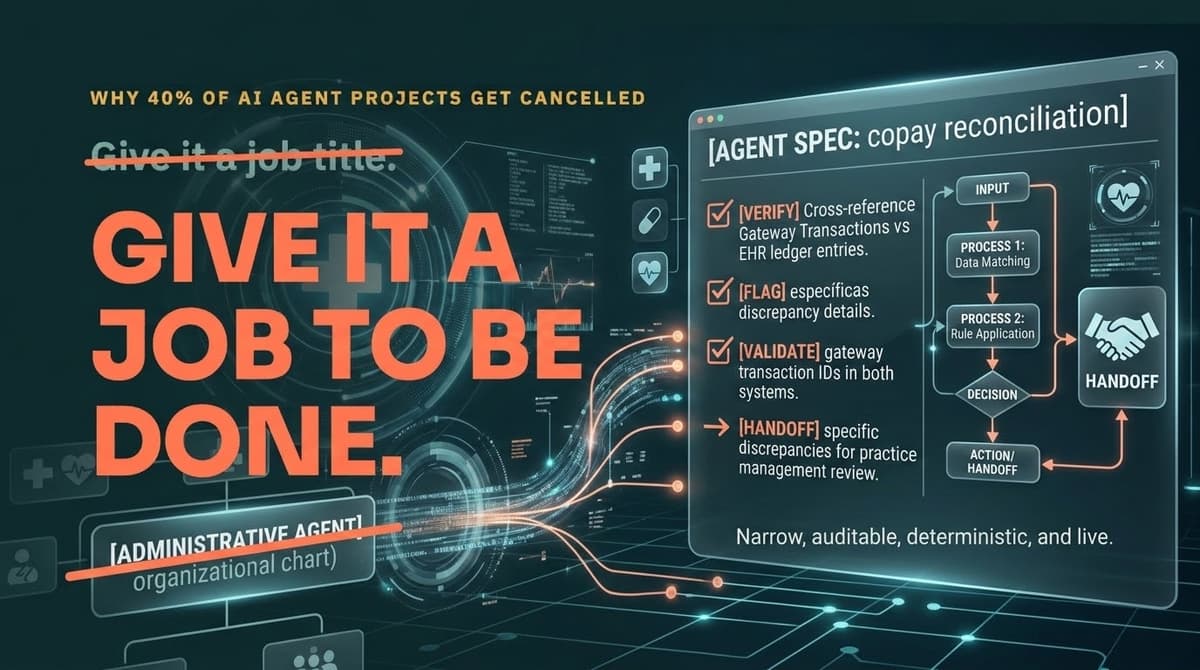
Give Your AI Agent a Job To be Done, Not a Job Description
XY.AI Labs Team
September 21, 2026
Reading Time5 mins
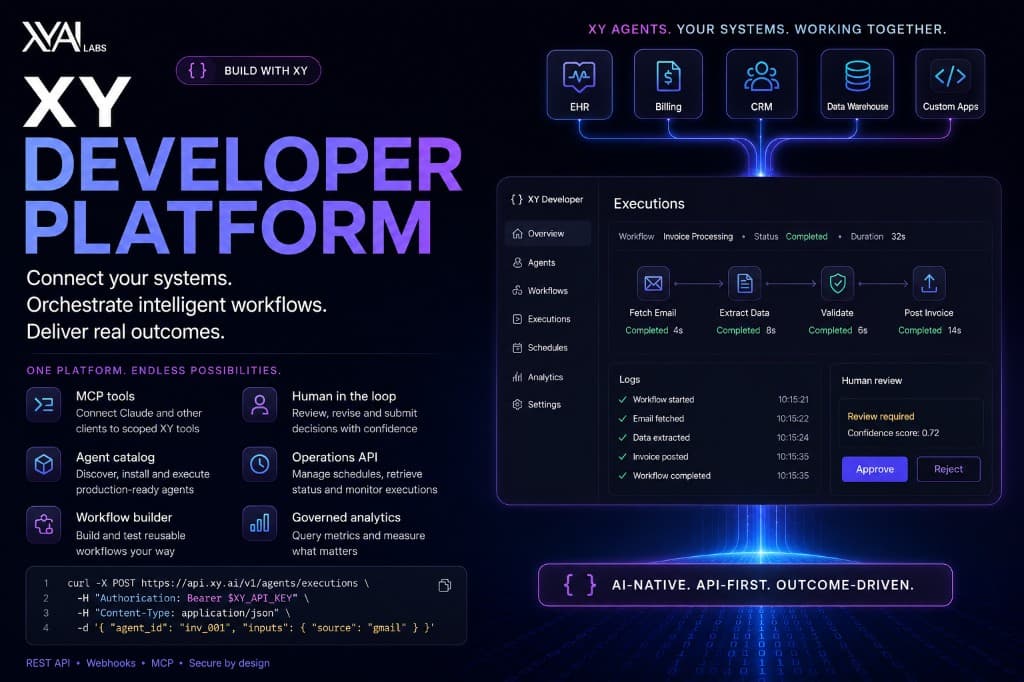
Introducing the XY Developer Platform That Your Team Can Build On
XY.AI Labs Team
August 28, 2026
Reading Time4 mins

You Can't Claude Your Way Through Healthcare

Scott Cressman
August 14, 2026
Reading Time6 mins
Ten Signs You're Ready or Not

Sam De Brouwer
August 3, 2026
Reading Time8 mins
Now Connecting to 3,500+ Payers. Here's What That Means for You
XY.AI Labs Team
July 9, 2026
Reading Time5 mins

Does Your Staff Log Into 12 Portals Before 9 AM?
XY.AI Labs Team
June 25, 2026
Reading Time3 mins

What You Don't Build Today Will Be Difficult to Catch Tomorrow
Sam De Brouwer
June 18, 2026
Reading Time8 mins
XY.AI Labs Expands Integration with athenahealth and AdvancedMD
XY.AI Labs Team
May 27, 2026
Reading Time4 mins
Bringing AI to Behavioral Health at Scale: 10,000 Specialists, 4 Million Patients
XY.AI Labs Team
May 6, 2026
Reading Time5 mins
XY.AI and Uberdoc Partner to Bring AI to the Frontlines of Healthcare: Reaching 5,000 Practices Across All 50 States
XY.AI Labs Team
April 30, 2026
Reading Time4 mins

From Static Compliance to Living Compliance
XY.AI Labs Team
April 29, 2026
Reading Time10 mins
Are You Still Running Your RCM in the Dark?
XY.AI Labs Team
April 15, 2026
Reading Time4 mins

The Missing Layer in Healthcare AI: Execution
Sam De Brouwer
March 11, 2026
Reading Time5 mins
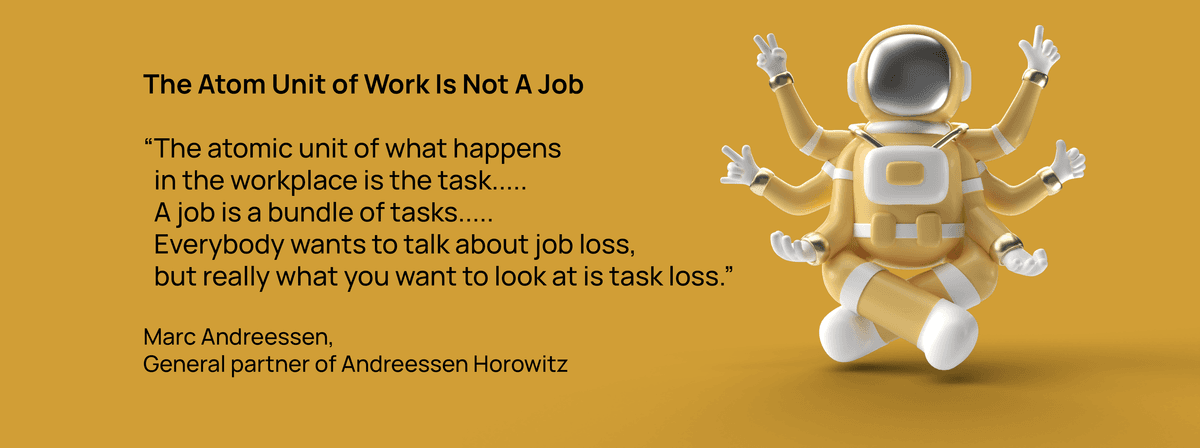
Are You Automating Jobs or Redesigning Work?
XY.AI Labs Team
February 21, 2026
Reading Time4 mins
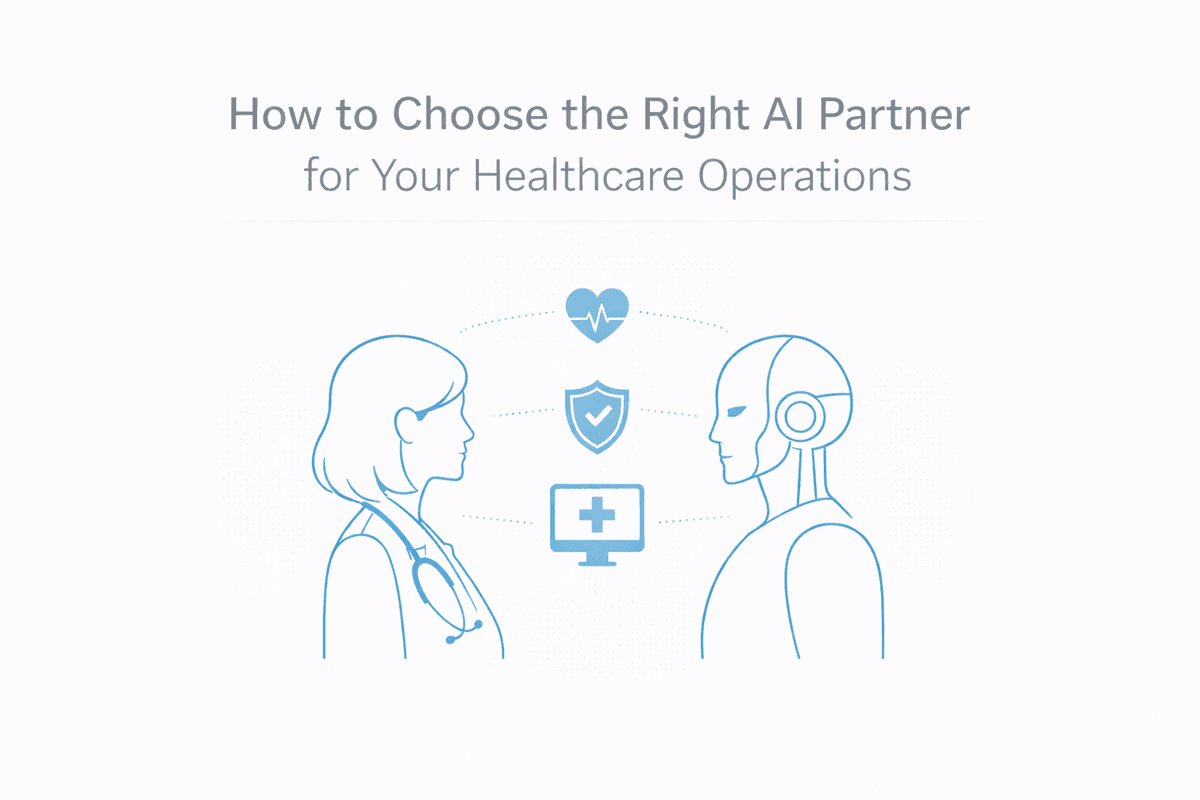
How to Choose the Right AI Partner for Your Healthcare Operations
XY.AI Labs Team
February 5, 2026
Reading Time5 mins

Have We Been Here Before? A Thought on AI Infrastructure
Sam De Brouwer
January 29, 2026
Reading Time5 mins

Finally, Healthcare Is Becoming a Learning System with AI as its Catalyst
Sam De Brouwer
December 19, 2025
Reading Time7 mins
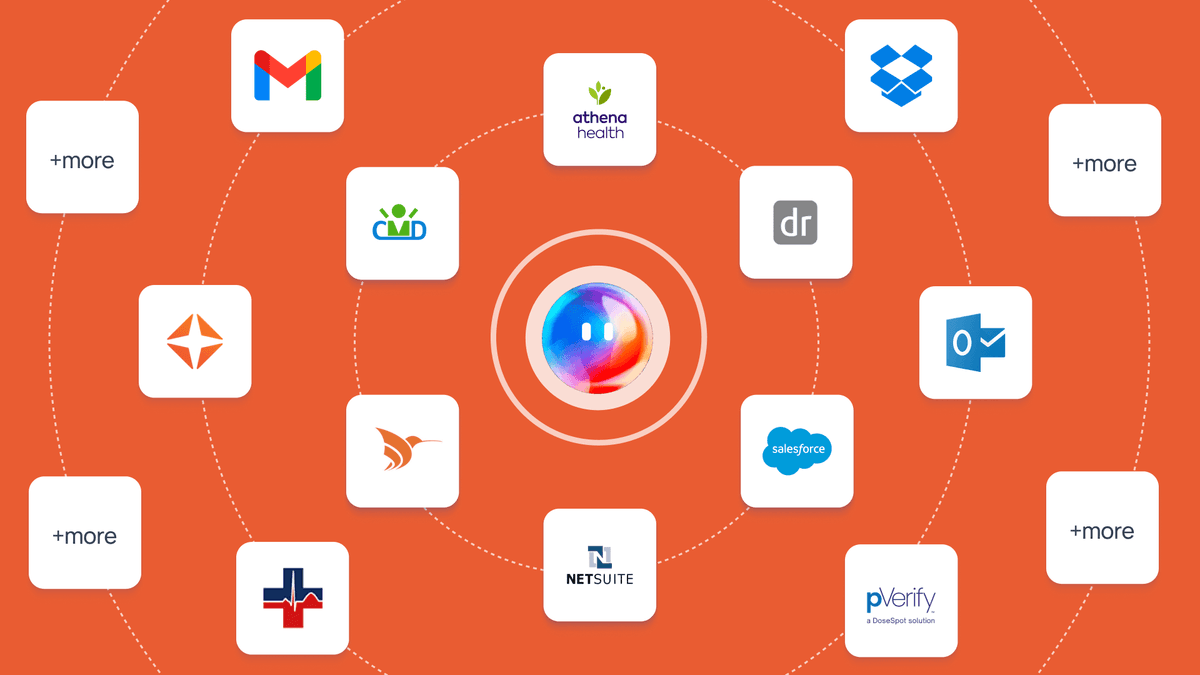
Connect Healthcare Systems with Agentic AI
XY.AI Labs Team
November 24, 2025
Reading Time8 mins
You love LLMs and co-pilots? You'll love AI Agents even more.
Sam De Brouwer
November 13, 2025
Reading Time10 mins
Why I'm Building for the Overlooked Majority of Healthcare
Sam De Brouwer
November 10, 2025
Reading Time6 mins
From Code to Care: How Zero-Cost Software Is Reshaping Healthcare
Sam De Brouwer
October 13, 2025
Reading Time8 mins
From Clicks to Care: Reinventing Healthcare Workflows with Our XY.AI Multimodal Browser Agents
Scott Cressman
September 12, 2025
Reading Time5 mins
Tough conversations about success and failure are not new in AI
Sam De Brouwer
August 28, 2025
Reading Time3 mins
9 Real-World Applications of AI Across Industries
XY.AI Labs Team
August 24, 2025
Reading Time10 mins
10 Benefits of Artificial Intelligence in Healthcare
XY.AI Labs Team
August 23, 2025
Reading Time10 mins
Three Reports, One Message: Give Time Back to Care
XY.AI Labs Team
August 22, 2025
Reading Time2 mins
What Free Compute Signals About a Startup like XY.AI Labs?
Sam De Brouwer
August 14, 2025
Reading Time4 mins
What We're Learning From Our Latest Integrations
Sam De Brouwer
July 31, 2025
Reading Time6 mins
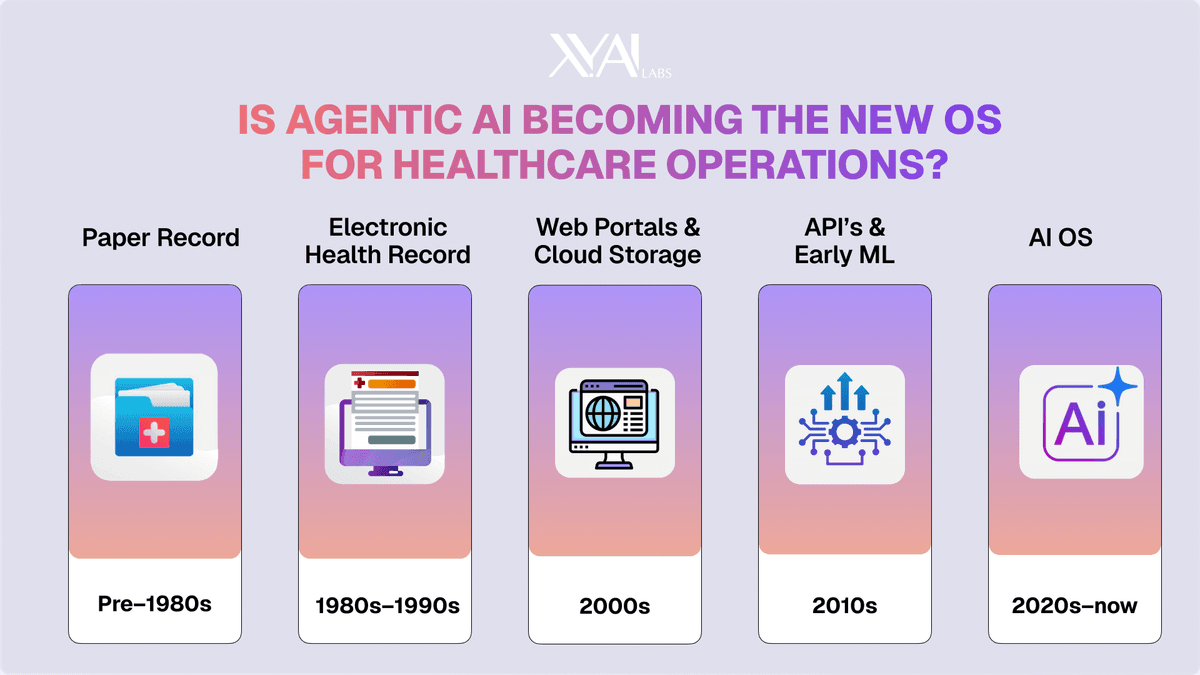
Is Agentic AI Becoming the New OS for Healthcare Operations?
Sam De Brouwer
July 10, 2025
Reading Time4 mins
9 AI Trends To Transform Healthcare and Medicine And Why They're Closer Than You Think
XY.AI Labs Team
June 10, 2025
Reading Time5 mins

What I am Learning on the Front Lines of RCM in Healthcare - and Why We Can't Ignore Automation Any Longer
Sam De Brouwer
May 6, 2025
Reading Time8 mins
AI Agents in Healthcare: The Smart Workforce You Didn't Know You Could Have
Scott Cressman
April 17, 2025
Reading Time8 mins
15 Years at the Edge of AI and Healthcare - and Why Everything has Changed
Sam De Brouwer